What rent cashflow tokens actually are
Rent cashflow tokens are digital securities that represent fractional ownership in income-producing real estate. Unlike direct property ownership, which requires significant capital and management overhead, these tokens allow investors to buy shares of a property portfolio. The core mechanism is straightforward: the underlying real estate generates rental income, which is then distributed to token holders as regular yield payments.
It is critical to distinguish these assets from traditional Real Estate Investment Trusts (REITs) or utility tokens. REITs are publicly traded funds that often hold diverse portfolios and are subject to different tax structures and liquidity profiles. Utility tokens, conversely, grant access to a service or platform and hold no equity value. Rent cashflow tokens are equity-based securities. They confer legal ownership rights and a claim on the net operating income of the specific asset or pool backing them.
The infrastructure behind these tokens typically involves a Special Purpose Vehicle (SPV) that holds the property title. Smart contracts automate the distribution of rent collections, ensuring transparency and reducing administrative friction. This structure aligns the investor’s return directly with the property’s performance. If the property generates strong cash flow, token holders receive higher yields. If vacancies rise or expenses increase, distributions adjust accordingly. This direct link between asset performance and investor return is the defining feature of the asset class.
While the concept of fractional ownership is not new, the tokenization layer adds liquidity and accessibility. Investors can trade these tokens on secondary markets more easily than selling a physical property deed. However, the primary value proposition remains the steady income stream. Understanding this mechanism is essential before considering any investment, as the yield is derived from real-world rental contracts, not speculative market dynamics alone.
The infrastructure behind onchain yield
Tokenized rent cashflow relies on a stack that bridges traditional property management with blockchain logic. The system must handle three distinct layers: legal identity, rent collection, and automated distribution. If any link in this chain breaks, the yield stops.
Token standards and legal identity
Unlike generic ERC-20 tokens, rent cashflow tokens usually follow standards like ERC-3643 or ERC-1400. These standards embed compliance rules directly into the token contract. They ensure that only verified, KYC-checked wallets can hold or transfer the asset. This legal wrapper is what transforms a digital certificate into a recognized security.
Oracle feeds for rent collection
The smart contract cannot see your bank account. It needs an oracle to verify that rent was actually paid. Oracles pull data from property management platforms or bank APIs, confirming the incoming cashflow. This data triggers the next step: calculating the yield available for distribution. Without this trusted data feed, the contract remains blind to real-world income.
Automated distribution logic
Once the oracle confirms rent receipt, the distribution logic executes. The contract automatically splits the payment. A portion covers property expenses, and the remainder is sent to token holders’ wallets. This happens on-chain, removing the need for manual wire transfers or quarterly statements. The result is near-instant, transparent yield delivery.
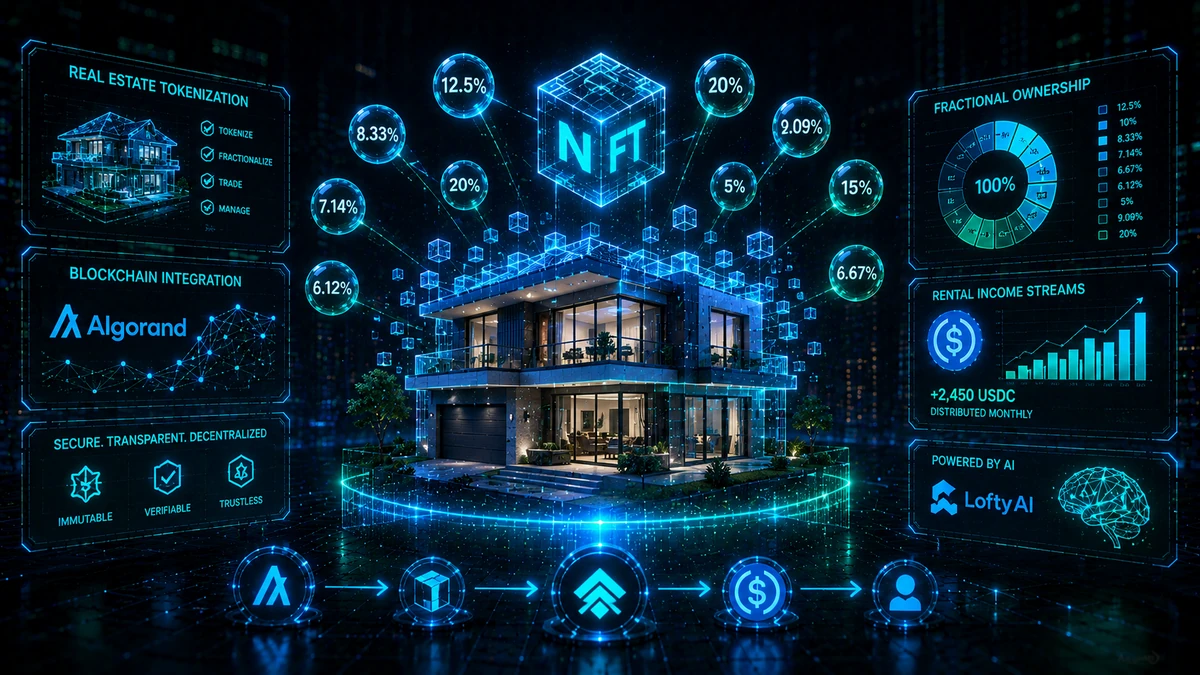
Market context
While the infrastructure automates the payout, the underlying asset value still fluctuates with the broader crypto market. Understanding this volatility is essential for long-term holders.
Comparing top rent cashflow token platforms
Rent Cashflow Tokens works best as a clear sequence: define the constraint, compare the realistic options, test the tradeoff, and choose the path with the fewest hidden costs. That order keeps the advice usable instead of decorative. After each step, pause long enough to check whether the recommendation still fits the reader's actual situation. If it depends on perfect timing, unusual access, or a best-case budget, include a simpler fallback.
| Factor | What to check | Why it matters |
|---|---|---|
| Fit | Match the option to the primary use case. | A good deal still fails if it does not fit the job. |
| Condition | Verify age, wear, and service history. | Hidden condition issues erase upfront savings. |
| Cost | Compare purchase price with likely upkeep. | The cheapest option is not always the lowest-cost option. |
Market research and yield analysis
Rent Cashflow Tokens works best as a clear sequence: define the constraint, compare the realistic options, test the tradeoff, and choose the path with the fewest hidden costs. That order keeps the advice usable instead of decorative. After each step, pause long enough to check whether the recommendation still fits the reader's actual situation. If it depends on perfect timing, unusual access, or a best-case budget, include a simpler fallback.
The simplest way to use this section is to write down the real constraint first, compare each option against it, and choose the path that still works outside ideal conditions.
Strategy for entering and exiting positions
Rent Cashflow Tokens works best as a clear sequence: define the constraint, compare the realistic options, test the tradeoff, and choose the path with the fewest hidden costs. That order keeps the advice usable instead of decorative. After each step, pause long enough to check whether the recommendation still fits the reader's actual situation. If it depends on perfect timing, unusual access, or a best-case budget, include a simpler fallback.
No comments yet. Be the first to share your thoughts!